WooCommerce Review (2026): Best Open-Source eCommerce Platform for WordPress?
WooCommerce is one of the most popular open-source eCommerce solutions, built specifically for WordPress. This review explains how it works, where it excels, and whether it is the right platform for your store.
mb-2">WooCommerce is one of the most popular open-source eCommerce solutions, built specifically for WordPress. This review explains how it works, where it excels, and whether it is the right platform for your store.
#x1F4C5; Last verified: July 2026WooCommerce is the best choice for flexibility and control - but it requires more setup and management than Shopify.
⚡ Quick Verdict
WooCommerce is best for users who want full control over their eCommerce store and are comfortable managing a WordPress site.
It is not ideal for users who want full control over their website infrastructure or avoid monthly fees.
If flexibility and customization matter most, WooCommerce is a strong option.
🧩 What is WooCommerce?
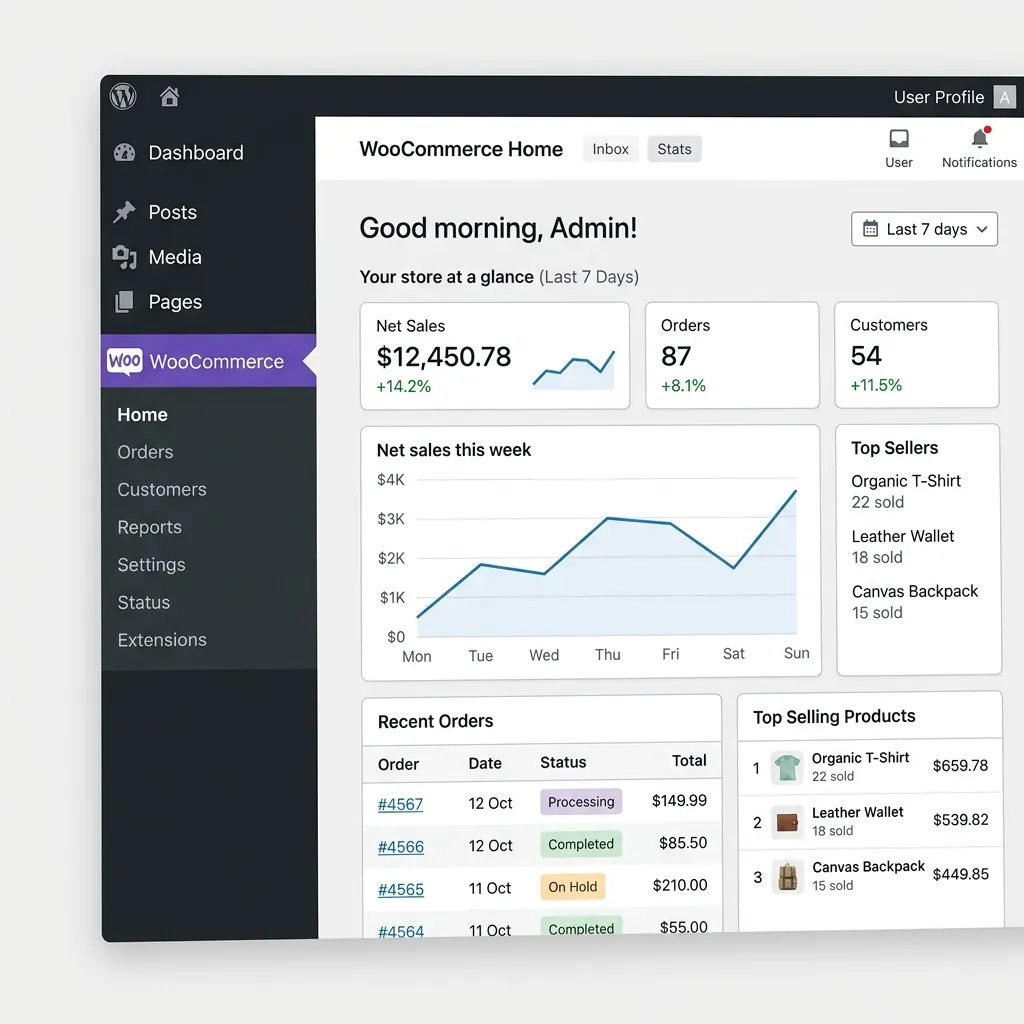
WooCommerce is an open-source eCommerce plugin for WordPress that allows users to turn a website into a fully functional online store.
Unlike hosted platforms, WooCommerce requires users to manage hosting, security, and setup.
It is widely used by businesses that want full control over their store and its functionality.
👤 Use WooCommerce if...
-
check_circle
You use WordPress
-
check_circle
You want full control over your store
-
check_circle
You need advanced customization
-
check_circle
You are comfortable managing hosting
WooCommerce is especially strong for:
🚫 Not for you if...
-
cancel
You want a simple setup
-
cancel
You prefer a hosted platform
-
cancel
You don’t want to manage infrastructure
-
cancel
You are new to website building
In those cases, Shopify may be usually the better option.
🔧 Key Features
Open-source flexibility
Full control over store functionality, design, and hosting with open-source software.
WordPress integration
Built specifically for WordPress, seamlessly integrating with themes, plugins, and the block editor.
Plugin ecosystem
Access to thousands of free and paid plugins to extend store features and marketing capabilities.
Customization
Highly customizable with access to theme code, hooks, and REST APIs for unique brand experiences.
Ownership
You fully own your store, data, and infrastructure, with no risk of platform-level account suspension.
🧠 Real-World Use Cases
Custom stores
Building unique eCommerce experiences with deep customization requirements.
Content + commerce
Combining powerful blogs and media content with advanced online store features.
SEO-driven stores
Leveraging WordPress for powerful content marketing and search engine rankings.
Advanced projects
Creating highly complex eCommerce setups with specific API or data integrations.
💰 Pricing Reality
WooCommerce itself is free, but costs come from: hosting, themes, plugins, and development.
Costs can vary widely depending on the setup and required features.
Compared to Shopify, WooCommerce can be cheaper or more expensive depending on complexity and management.
thumb_up Pros
-
+
Full control and flexibility
-
+
No platform lock-in
-
+
Strong WordPress integration
-
+
Highly customizable
thumb_down Cons
-
−
Requires setup and maintenance
-
−
Technical knowledge needed
-
−
Costs can vary significantly
-
−
Less beginner-friendly
⚖️ WooCommerce vs Alternatives
WooCommerce vs Shopify
WooCommerce offers control, Shopify offers simplicity.
Read Review arrow_forwardWooCommerce vs Wix
WooCommerce is more powerful, Wix is easier for basic stores.
Read Review arrow_forwardWooCommerce vs BigCommerce
WooCommerce is more flexible, BigCommerce is more managed and out-of-the-box.
Read Review arrow_forward🏁 Final Verdict
WooCommerce is one of the best options for building a fully customizable eCommerce store.
It is not the easiest platform, but it offers unmatched flexibility for businesses.
If you want full control and are comfortable managing your site, WooCommerce is a strong choice.